

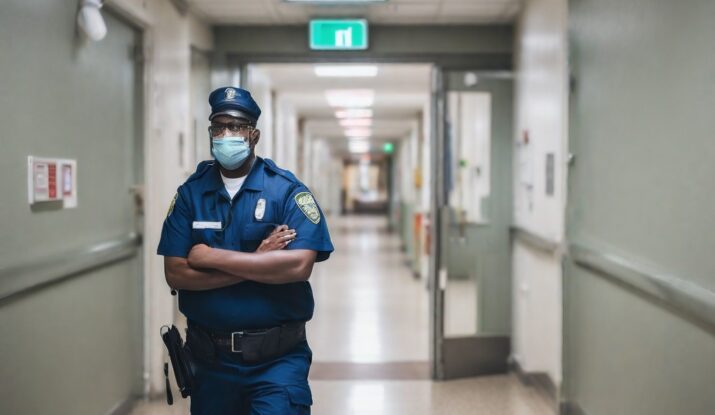
Hospitals are sensitive environments where the security needs are both complex and critical. Hospital security personnel must protect patients, visitors, and staff while ensuring the smooth functioning of daily operations.
Unique Security Challenges in Hospitals
- High Footfall: Large volumes of people increase the risk of unauthorized access.
- Sensitive Information: Protecting patient data and medical records from breaches.
- Emergency Scenarios: Hospitals must be prepared for emergencies like fires or violent outbursts.
- Drug Theft and Misuse: Controlled substances are attractive targets for theft.
Roles and Responsibilities of Hospital Security Officers
- Monitor entry and exit points.
- Conduct ID checks and maintain visitor logs.
- Patrol sensitive areas like ICUs, pharmacies, and data centers.
- Assist in de-escalating aggressive behavior.
- Support during medical emergencies by coordinating with ambulance services.
Technology in Hospital Security
- CCTV and Monitoring Systems: For constant surveillance.
- Access Control Systems: To restrict entry to authorized personnel only.
- Alarm and Lockdown Systems: For quick response during threats.
Benefits of Professional Hospital Security Services
- Ensures compliance with healthcare regulations.
- Improves patient and staff morale.
- Reduces liability and risk.
- Enhances the hospital’s public image.
A well-secured hospital isn’t just safer—it also functions more efficiently and compassionately. Security plays a silent yet vital role in creating a healing environment.